
From Sampot to Claiming Chut Thai: The Strategy Behind Cambodia's UNESCO Nomination Dossier
Thai traditional dress has become a primary target of cultural appropriation, extending to the covert inclusion of Chut Thai imagery within UNESCO nomination dossiers—a practice that critics denounce as outright cultural theft.
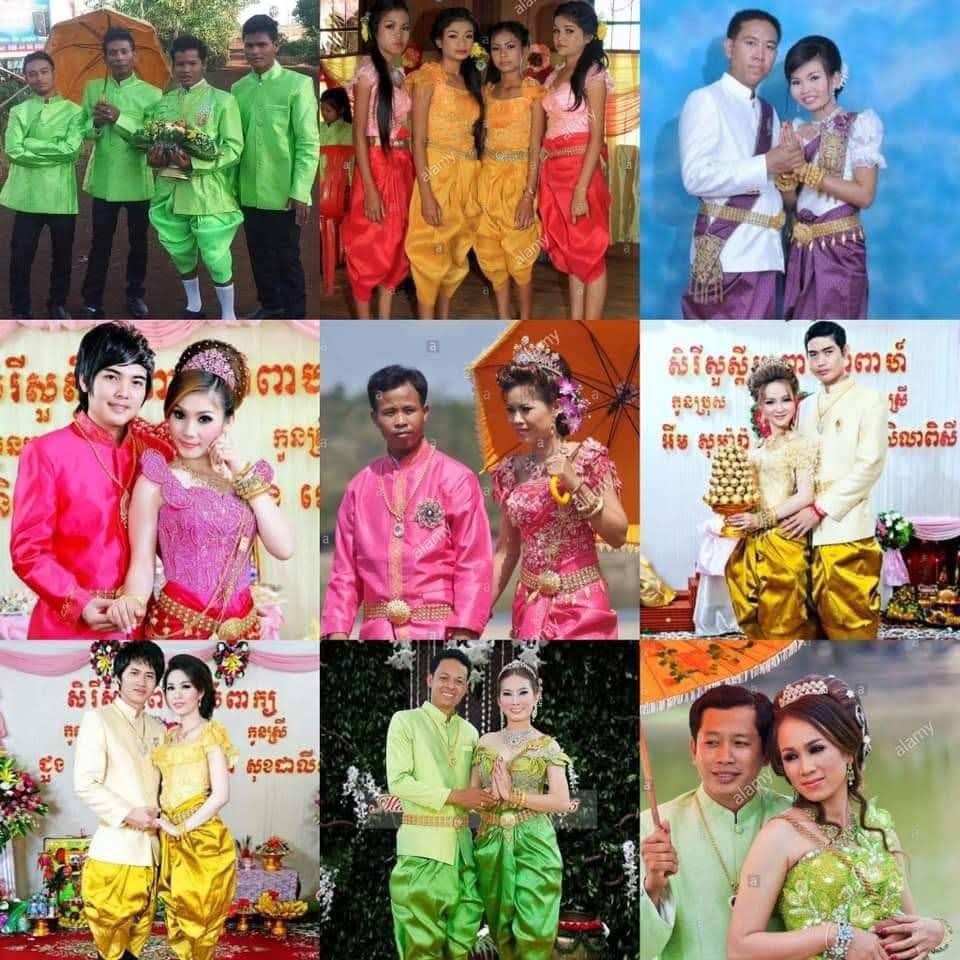
Looking back at wedding photographs in Cambodia from two to three decades ago, a familiar sight was the bride and groom dressed in the traditional Sampot or wearing a classic short sabai (draped shawl). These garments represented a long-standing identity and local craftsmanship passed down through generations of the Khmer people.
However, looking at popular luxury weddings in Cambodia over recent years, the picture has shifted dramatically. Cambodian brides now overwhelmingly wear "Chut Thai Chakri" or "Chut Thai Siwalai," complete with long sabai embroidered with gold thread and opulent Thai-style jewelry. At a casual glance, without noticing the Khmer script or Cambodian flags displayed at the venue, almost anyone would mistake these events for authentic Thai weddings.
(A frequently observed phenomenon is the tendency in Cambodia to display national flags in various locations without obvious context—an expression often interpreted by observers as identity anxiety, leading to an overzealous display of nationalism seldom seen in other nations.)
This phenomenon is not merely a passing fashion trend, but the inception of a complex cultural dispute in which one nation attempts to openly appropriate and claim ownership of another's cultural heritage.
---
The "Love Destiny" Phenomenon: A Turning Point in Cambodian Attire
The origins trace back to 2018, when the Thai television drama Love Destiny (Bupphesanniwat) became a sensation across Southeast Asia as a powerful display of Thai soft power. In Cambodia, the show gained immense popularity. Many citizens began donning Thai traditional dress for photoshoots at historical sites, festivals, beauty pageants, and wedding ceremonies. Consequently, Thai attire became the dominant preference, overshadowing the traditional national wedding dress, the Sampot, to the point of near disappearance.
---
Historical Distortion and Propaganda Campaigns
As the popularity of Thai dress grew, state-aligned media and social media platforms in Cambodia began disseminating propaganda to reshape public perception, claiming that "this style of wedding attire was originally Cambodian since ancient times, and Thailand had merely copied it."
However, international historical records clearly document that "Chut Thai Phra Ratcha Niyom" (Thai Royal Dress Standards) was systematically researched, compiled, and designed by Her Majesty Queen Sirikit The Queen Mother, working alongside world-renowned costume designers during the 1960s. Historical photographs, archival documents, and physical textile artifacts are prominently displayed as empirical evidence in international museums.
Nevertheless, many Cambodian citizens had limited access to external historical documentation. This persisted despite earlier incidents where security officers at Angkor Wat famously barred Vietnamese tourists wearing Thai dress from taking photographs, explicitly citing regulations against wearing foreign national costumes (specifically Thai attire) within the heritage site. This incident clearly demonstrates that Cambodian authorities previously recognized Thai dress as a foreign cultural form.
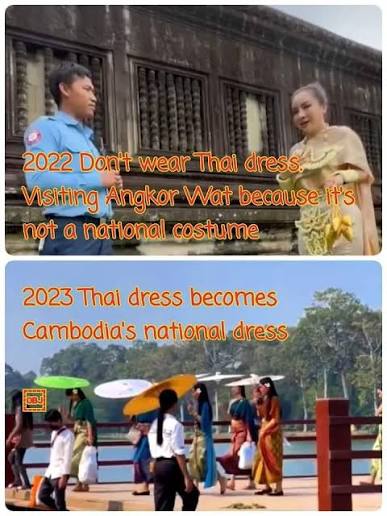
The Cambodian government previously prohibited the wearing of Thai traditional dress at Angkor Wat, but later reversed its stance to claim the attire as Cambodian heritage.
Unable to stem the tide of public preference, authorities shifted strategy, utilizing state-controlled channels to reframe Thai dress as "ancient Khmer attire" to accommodate domestic popularity—a tactic similarly applied to border disputes and ethnic lineage narratives, leaving the traditional Sampot almost entirely absent from contemporary Cambodian life.
---
The Strategy of Infiltration in UNESCO Nominations
A recurring strategy involves attempting to register desired cultural items with UNESCO. Cambodian authorities are well aware that they cannot directly submit "Chut Thai" for registration—unlike internet users who routinely save images from the web and overlay them with the Cambodian flag.
Authorities recognize that "Chut Thai" has long been established in global public memory through the royal duties and international appearances of Her Majesty Queen Sirikit. Even though Thailand has not yet formally registered Chut Thai on the UNESCO Intangible Cultural Heritage list, it is globally recognized as Thailand's national attire. A direct attempt by Cambodia to claim Chut Thai as its own national dress would inevitably be rejected.
This led to a tactical pivot: reclassifying Thai dress from a "national costume" into "ancient Khmer wedding attire."
Lately, restrictions have been placed on wearing Thai dress for casual photoshoots (which was previously popular for fashion, family portraits, and children's photography). Logically, traditional wedding garments would not be worn for casual daily photography. Thus, a new narrative had to be constructed to frame the attire strictly as ceremonial wedding dress.
As Cambodia prepared to nominate "Traditional Khmer Wedding" to UNESCO's Intangible Cultural Heritage (ICH) list, the nomination team employed a strategy of "stealth inclusion." While the nomination was framed broadly under wedding traditions, the dossier quietly attached photos and videos of brides wearing modern adapted Thai traditional dresses.
The objective of this strategy is clear: Should UNESCO approve the overall category of wedding traditions, state propaganda channels can immediately leverage the formal approval to claim to the domestic public and international audience that "UNESCO has officially recognized the wedding dress (featuring Thai attire) as Cambodian cultural heritage!" This represents an exploitation of documentation loopholes to covertly claim a neighboring nation's heritage.
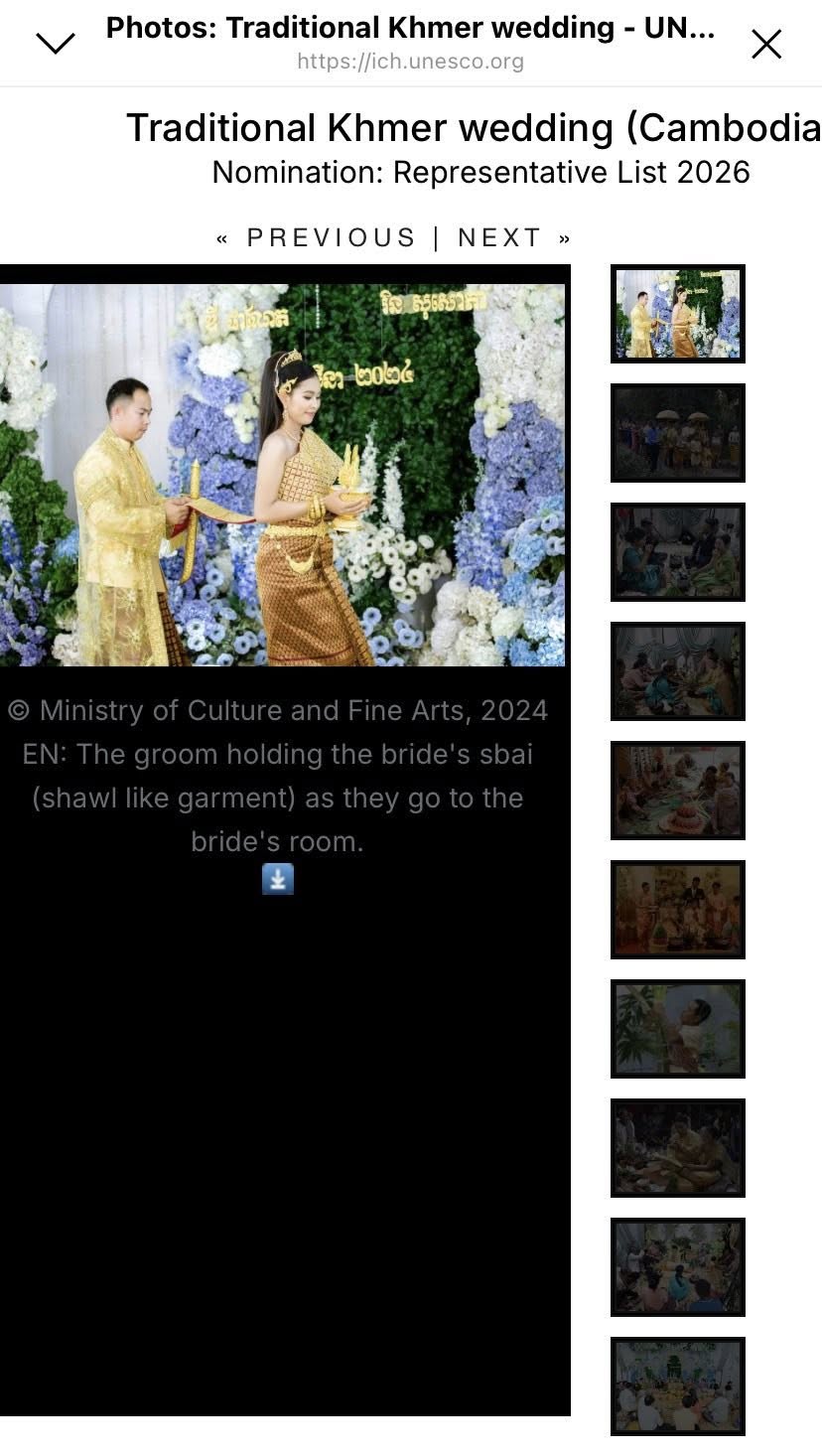
Images of Thai dress smuggled into Cambodia's UNESCO application dossier, despite its popularity in Cambodia originating from recent Thai television dramas.
This pattern of narrative manipulation following UNESCO listings has occurred previously, such as with Lbokator (claimed as the origin of Muay Thai) and Lkhon Khol Wat Svay Andet (claimed as the root of Thai Khon masked dance, despite original costumes and headpieces being entirely distinct before gradually being modified to resemble Thai Khon). In the case of Thai dress, even while the nomination process remains incomplete, promotional banners and photo opportunities have already been prepared in Cambodia declaring that Thai dress has been certified as their "national costume."
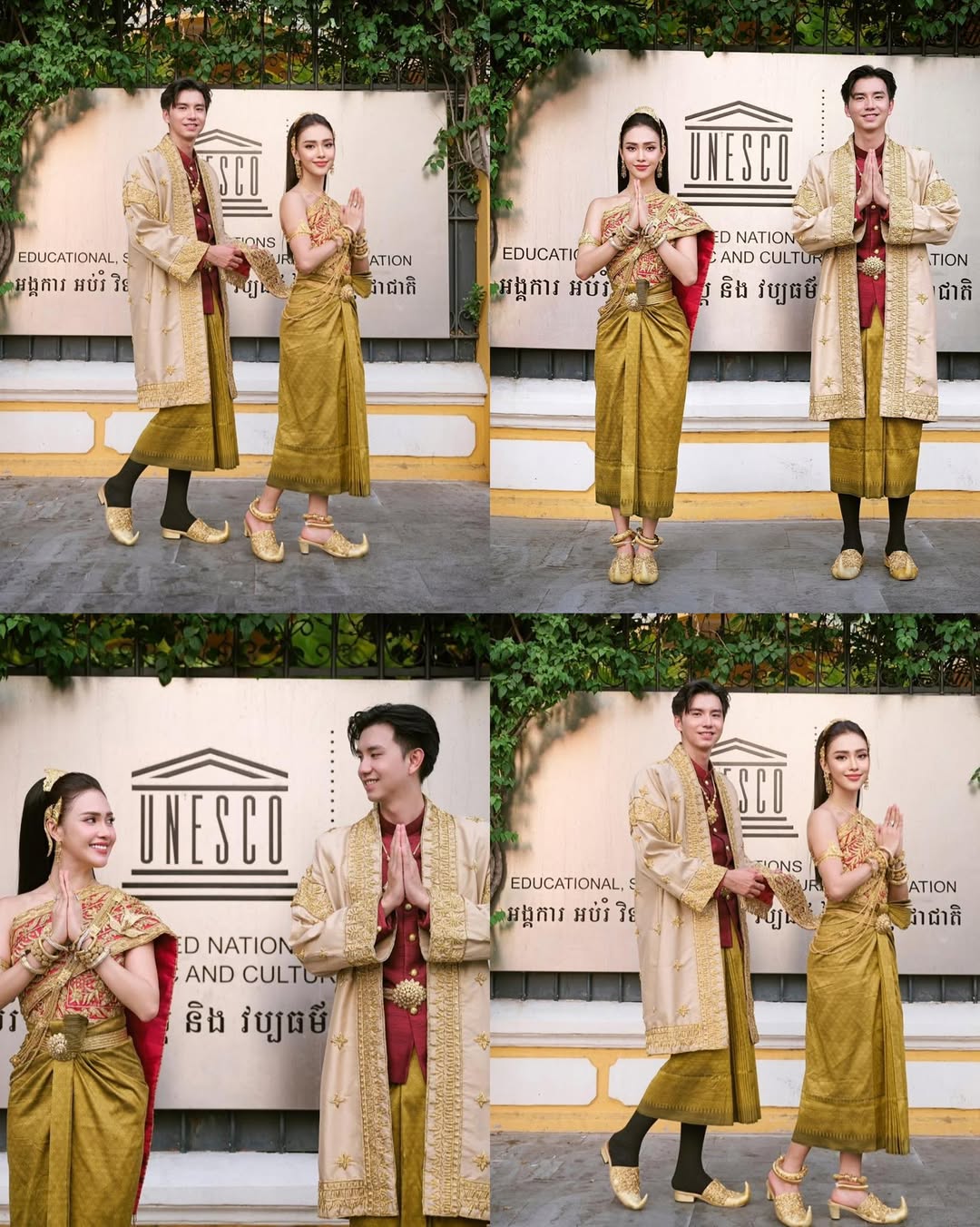
Cambodia preparing to celebrate UNESCO recognition of a "national dress," despite submitting the dossier under the banner of ancient Khmer wedding attire.
---
Conclusion: The Imperative for International Rigor
In truth, the Sampot and Cambodia's authentic traditional heritage possess inherent charm and value without needing to appropriate the legacy of neighboring nations. Attempting to distort history and insert images of Thai attire into international dossiers ultimately undermines a nation's cultural credibility on the global stage.
This issue serves as an important reminder that UNESCO committees and international academic bodies must rigorously audit nomination dossiers to ensure that living heritage is not manipulated for propaganda or misinformation by entities with ulterior motives.
---
External References & Verified Sources
1. UNESCO Intangible Cultural Heritage Official Database: Files 2026 under process: Traditional Khmer wedding (Cambodia).gov / .edu
2. Queen Sirikit Museum of Textiles: Chud Thai: Royal Dress Styles and Heritage Preservation
3. Chulalongkorn University Research & Academic Articles: Her Majesty Queen Sirikit and Thai Textiles Preservation.gov / .edu
4. The Nation Thailand (International News): A Digital Immersive Journey Through Thailand's Royal Costume Legacy
5. Thailand NOW (Official Portal): Chud Thai: Every Thai Traditional Dress Explained.gov / .edu